Halloween-Candy-And-Dogs
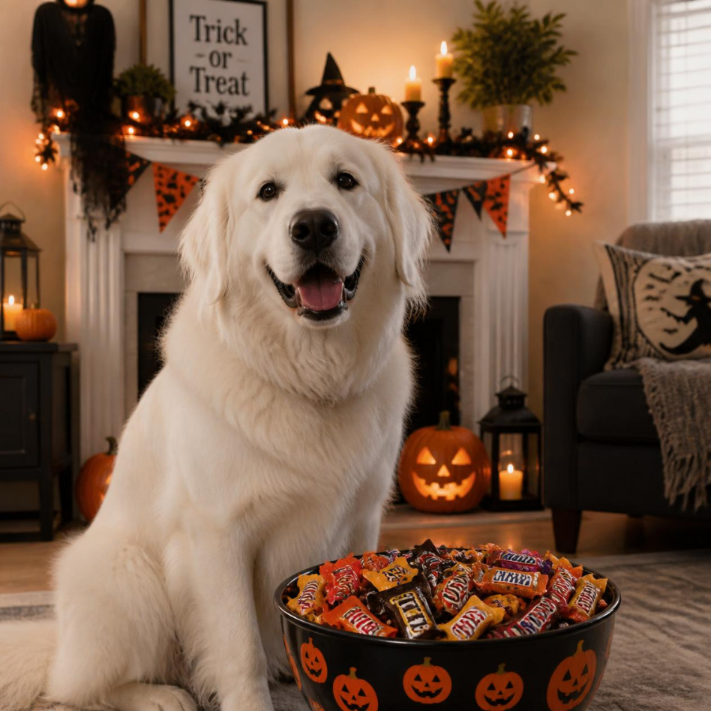
Every October, the same thing happens in dog households everywhere. A bowl of candy appears. It sits on a counter, a coffee table, or the bench by the front door. And somewhere in the house, a dog who has been told "no" about food exactly 4,000 times looks at that bowl and does the math.
Halloween Candy and Big Dogs:
How to Keep Your Dog Safe During Chocolate Season
Every October, the same thing happens in dog households
everywhere. A bowl of candy appears. It sits on a counter, a coffee table, or
the bench by the front door. And somewhere in the house, a dog who has been
told "no" about food exactly 4,000 times looks at that bowl and does
the math.
If you live with a big dog, you already know how that math
goes. Big dogs have long reach, long tongues, and a talent for
"accidentally" clearing a countertop. The candy bowl is not a
challenge. It's a buffet.
Here's the part that surprises a lot of large-dog owners: being
big does not make your dog safe. Yes, size matters when it comes to
chocolate toxicity, and a 90-pound dog can handle a bigger dose than a 9-pound
dog. But big dogs also eat bigger quantities, and some Halloween hazards
(xylitol, wrappers, a whole bag of fun-size bars swallowed in a single gulp)
are dangerous at any size.
So let's go through all of it: what's actually toxic, how to
tell a "keep an eye on him" situation from a "get in the car
now" situation, what to do in the first ten minutes, and how to set your
house up so none of it happens in the first place.
(I'm not a veterinarian, and this article is general
information, not a substitute for advice from your own vet or a poison control
hotline. When in doubt, call. I'll say that a few more times before we're done,
because it's the most important sentence in the post.)
Why chocolate is dangerous for dogs
Chocolate contains two compounds from the same family: theobromine
and caffeine. Humans metabolize theobromine quickly. Dogs process it far
more slowly, so it builds up in their system and sticks around for a long time.
Too much theobromine affects a dog's heart, nervous system,
and kidneys. The result can range from an upset stomach to a racing heart,
tremors, seizures, and in severe cases, death.
The key thing to understand is that not all chocolate is
equal. The darker and more concentrated the chocolate, the more theobromine
it contains.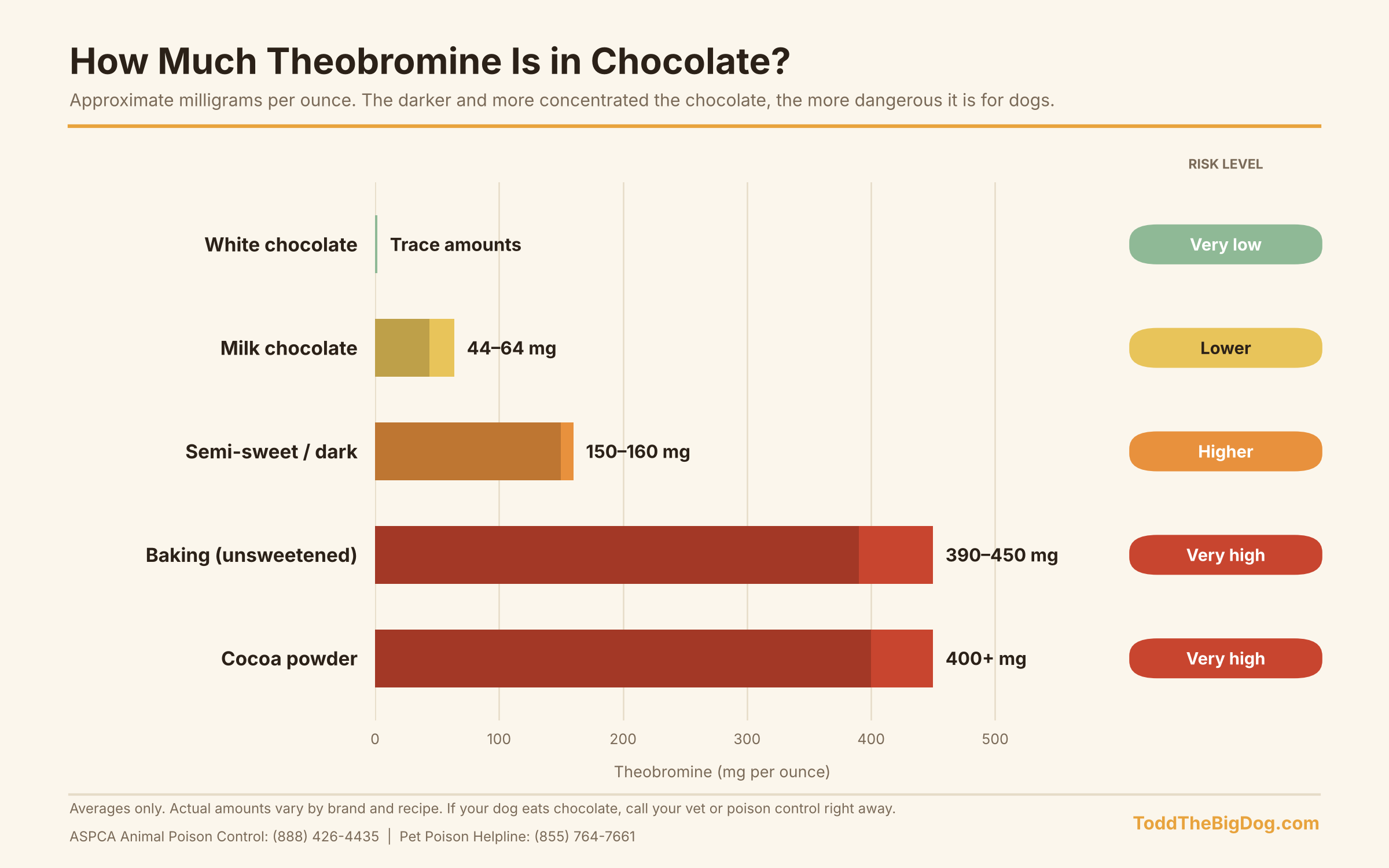
Those numbers are averages. Actual content varies by brand
and recipe, which is one reason vets and poison control ask you to read the
label and tell them exactly what your dog ate.
How much is too much?
Vets generally talk about toxicity in milligrams of
theobromine per kilogram of body weight:
Around 20 mg/kg:
mild signs may appear (vomiting, restlessness, increased thirst, diarrhea)
Around 40–50 mg/kg:
cardiac effects become a concern (fast or irregular heartbeat)
Around 60 mg/kg and above:
seizures and serious toxicity become possible
Let's use a realistic big-dog example. An 80-pound dog
weighs about 36 kg. Mild signs at 20 mg/kg would start around 720 mg of
theobromine. That's roughly:
11 to 16 ounces of milk chocolate, or
about 4.5 to 5 ounces of dark chocolate, or
under 2 ounces of baking chocolate
That's why a big dog who eats a couple of fun-size milk
chocolate bars is often (not always) looking at a stomach upset rather than an
emergency. But look at that baking chocolate number. A big dog who gets into
brownie mix, a baking bar, or a bag of dark chocolate minis can be in real
trouble fast.
Please don't use this as permission to wait and see. Treat
the math as a way to understand why the vet or poison control will ask you
specific questions, not as a do-it-yourself decision tool. Dogs vary. A dog
with a heart condition, a senior dog, or a dog on certain medications may react
at lower doses. And Halloween candy rarely comes as one tidy, clearly labeled
ingredient. More on that in a moment.
It's not just chocolate: the rest of the Halloween hazard list
Chocolate gets all the attention, but a trick-or-treat bag
is a full toxicology lineup. Here's what else to watch for.
Xylitol: the sneaky one
Xylitol is a sugar substitute found in sugar-free gum, some
mints, some sugar-free candies, certain baked goods, and a surprising number of
other products. In dogs, it can cause a rapid, dangerous drop in blood sugar
and, at higher doses, serious liver damage.
Xylitol is toxic at much smaller amounts than chocolate. A
few pieces of sugar-free gum can be a genuine emergency for a dog. If your dog
got into a bag that included any sugar-free candy or gum, treat that as
urgent and call poison control or your vet right away, even if everything
seems fine at the moment. Signs like weakness, stumbling, vomiting, or collapse
can show up quickly.
Always check ingredient lists. If you hand out sugar-free
treats, keep them in a separate, high, closed container.
Raisins and grapes
Little boxes of raisins are a classic Halloween
"healthy option" handed out by well-meaning neighbors. Raisins and
grapes can cause kidney failure in dogs, and the toxic dose isn't predictable.
Some dogs get very sick from a small amount. Don't try to guess; call your vet
if your dog eats any.
Candy with nuts
Macadamia nuts are toxic to dogs and can cause weakness,
tremors, and vomiting. Other nuts are high in fat and can upset the stomach or
trigger pancreatitis. Chocolate and nut combinations add up to a double
problem.
Wrappers, sticks, and plastic
This one gets underestimated, especially with big dogs who
swallow things whole. Foil wrappers, plastic wrappers, lollipop sticks, and
candy bags can cause intestinal blockages. A blockage can mean vomiting, loss
of appetite, belly pain, and often surgery.
If your dog ate a pile of candy with the wrappers on, the
wrappers are part of the emergency, not an afterthought. Tell your vet exactly that.
Hard candies
Hard candies can break teeth and, when swallowed whole, can
become choking or blockage hazards, even in a large dog.
High fat and sugar
Rich, fatty, sugary foods can set off pancreatitis, a
painful inflammation of the pancreas. Signs include repeated vomiting, a
hunched or "prayer" posture, belly pain, lethargy, and loss of
appetite, and it can show up a day or two after the candy raid. So even in
cases where the chocolate dose is low, a big binge can still land a dog at the
vet. (If you've read our pancreatitis article, this is the connection: holiday
treats are one of the classic triggers.)
Candy corn and the "mostly harmless" candies
Candy corn, gummies, and many non-chocolate candies are
mostly sugar, so they're generally less of a poisoning risk. But "less
dangerous" isn't "good for dogs." A big haul can still cause
vomiting, diarrhea, or pancreatitis, and anything sugar-free needs the xylitol check.
Beyond the candy bowl: other Halloween dangers for dogs
Candy is the headline, but October has a few more tricks up
its sleeve.
Glow sticks and glow jewelry.
The liquid inside isn't typically deadly, but
it tastes terrible and can cause heavy drooling and irritation. Dogs who
chew them make a mess and a fuss.
Candles and jack-o'-lanterns.
A wagging tail and an open flame are a bad combination. Use battery-operated candles where a big dog's tail or nose can reach.
Decorations and cords.
String lights, fake cobwebs, and plastic spiders can cause
chewing injuries or blockages. Fake spiderweb stuffing in particular is a
notorious intestinal hazard.
Pumpkins.
Plain pumpkin is fine in small amounts. A moldy, carved, days-old pumpkin
is not. Don't let your dog snack on the porch pumpkin.
Costumes.
Make sure any dog costume doesn't restrict movement, vision, or breathing,
doesn't have small chewable parts, and isn't too hot. If your dog hates
it, skip it. A bandana is a respectable costume.
The doorbell.
For many dogs, the real Halloween danger is stress. Constant
knocking, strangers in costumes, and an open front door add up to a dog
who's overwhelmed, or a dog who bolts. Big, strong dogs can push through a
door faster than you can react.
What to do if your dog eats Halloween candy
Take a breath. Panic doesn't help, and speed does. Here's
the sequence.
1. Get your dog away from the rest of it
Remove access to anything remaining so they can't keep
eating while you sort things out.
2. Figure out what and how much
This is the information everyone is going to ask you for.
Try to find:
What exactly was it?
Grab the wrappers or packaging. Check whether it was
milk, dark, or baking chocolate, and whether it contained nuts, raisins, or xylitol.
How much?
Count missing pieces as best you can. Estimate high, not low.
When?
The time your dog ate it matters for treatment.
How much does your dog weigh? Know a recent number.
3. Call a professional right away
Don't wait for symptoms. With chocolate, signs can take
several hours to appear, and some dogs show almost nothing before getting
seriously ill.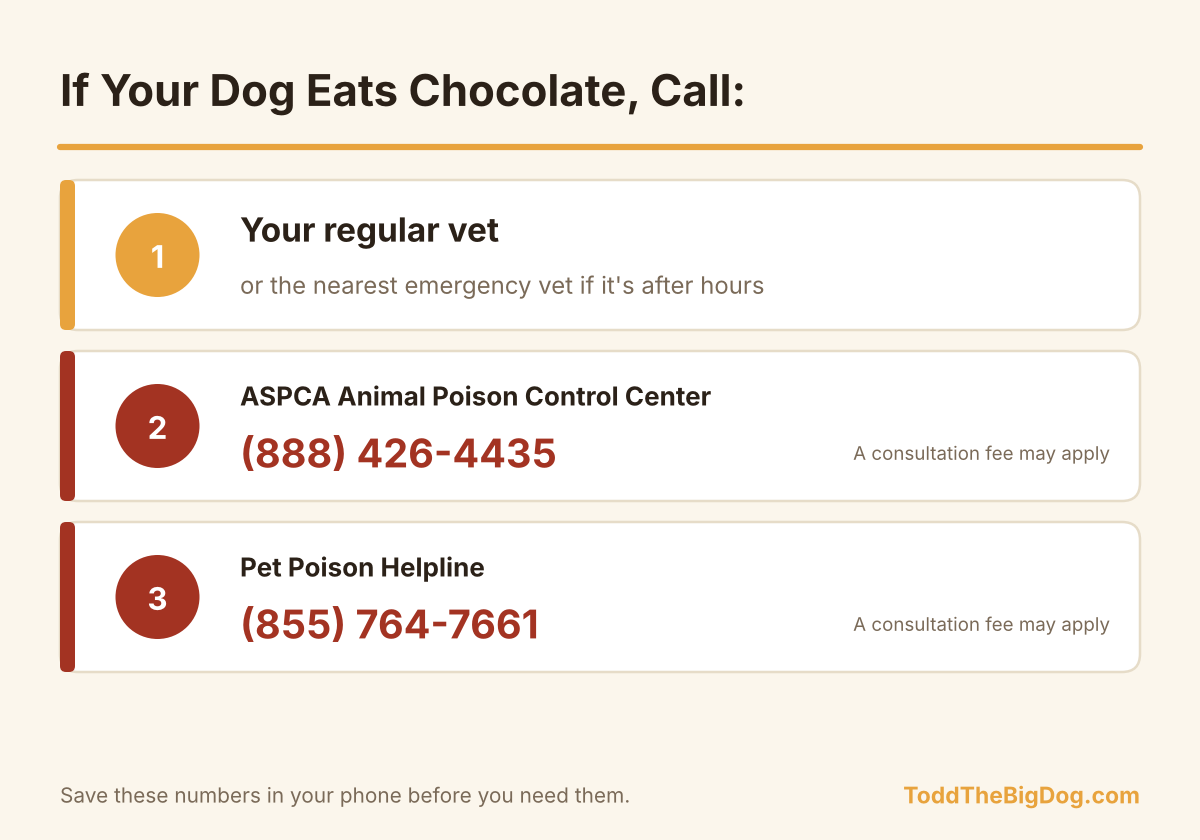
Save these numbers in your phone this week, before you need
them. Halloween candy emergencies have a way of happening at 9 p.m. on a
Friday.
4. Don't make your dog vomit without being told to
You may have heard that you should give your dog hydrogen
peroxide. Don't do this on your own. Inducing vomiting is only
appropriate in certain situations, can cause its own problems if done wrong,
and is dangerous in some cases (for example, certain items or a dog already
showing symptoms). Let a veterinarian or poison control professional decide,
and follow their exact instructions.
5. Follow the treatment plan, and watch closely
If your vet says to come in, go. Treatment for chocolate
ingestion may include inducing vomiting under supervision, activated charcoal
to limit absorption, IV fluids, and monitoring of heart rate and other
symptoms. Early treatment is dramatically more effective than waiting until the
dog is already sick.
Even if the vet says to monitor at home, keep watching for
several days. Theobromine lingers in a dog's body. Effects can last up to 72
hours in some cases, and the fat from a candy binge can trigger pancreatitis a
day or two later.
Signs of chocolate toxicity to watch for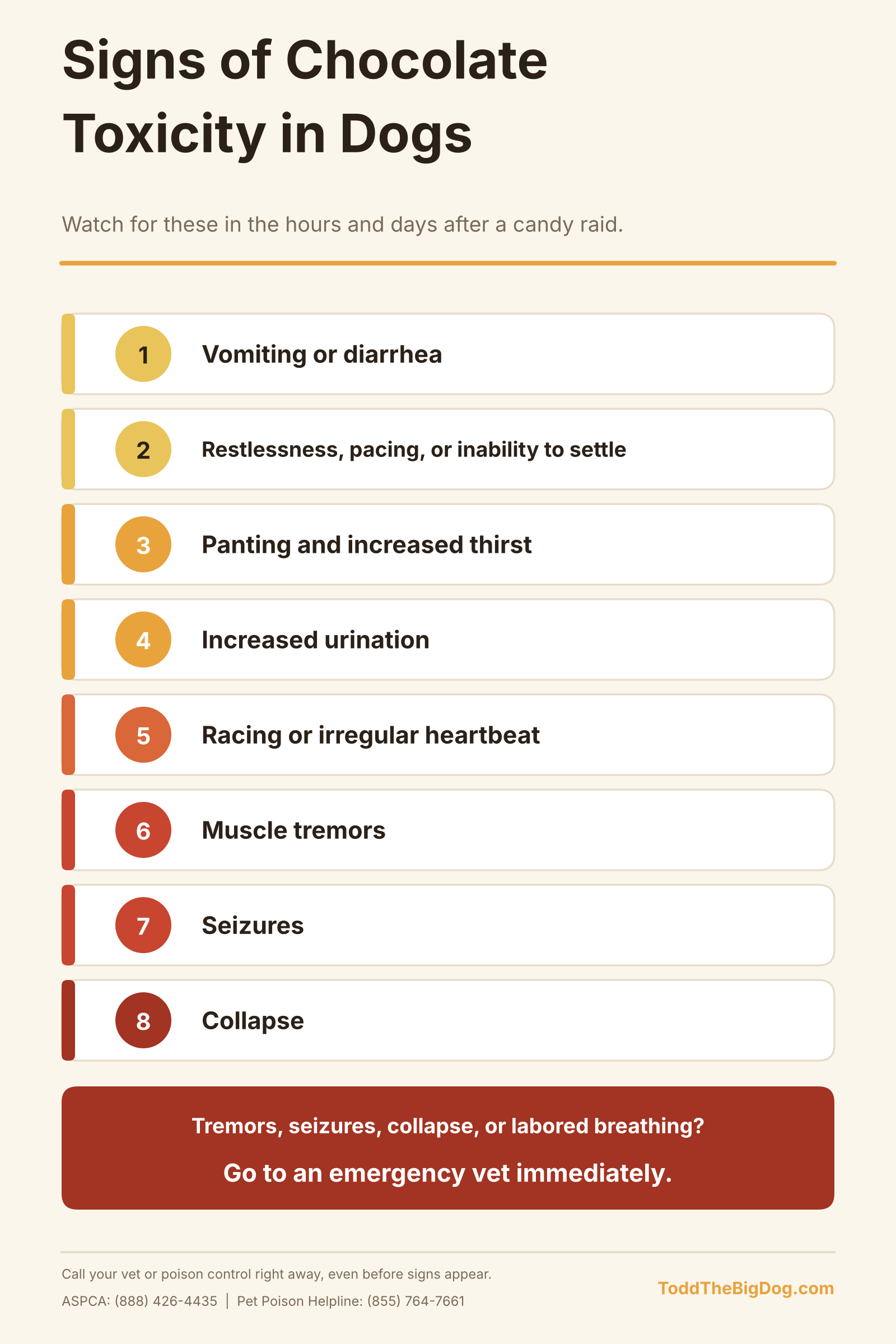
Any tremors, seizures, collapse, or labored breathing means
go to an emergency vet immediately.
How to Halloween-proof a house with a big dog
Prevention is far easier (and much cheaper) than an
emergency vet bill. Here's the practical setup.
Treat candy like medication
Think of candy the way you'd think of a bottle of pills with
a child-resistant cap that your dog has not yet figured out. Store it where a
dog can't get to it, which for a big dog means higher than you think, or behind
a closed door.
Don't rely on counters or tables.
A tall dog can reach most of them, and a determined one will drag a chair.
Use a closed cabinet or a high shelf.
Better yet, a closet or pantry with a door that latches. Some dogs can open a lever handle, so consider a baby-style latch.
Keep purses, backpacks, and trick-or-treat bags off the floor.
Kids' candy bags left by the couch are one of the most common ways dogs get into
trouble.
Create a "dog-safe zone" for trick-or-treat hours
The easiest way to protect your dog (and the neighborhood
kids) is to keep your dog away from the door entirely.
Set up a quiet room with a bed, water, a favorite chew, and maybe white noise or
music. Give them a long-lasting, dog-safe chew or a food puzzle so the evening is
boring in the best way. If your dog is anxious around the doorbell, this is also kinder than letting them stress at the door for three hours. Make
sure your dog's ID tag and microchip info are current in case an escape
does happen.
Don't leave the candy bowl by the door
The classic setup is a bowl on a small table by the
entryway, right at nose height for a large dog. Instead, keep the bowl in your
hand, or on a high spot you control, and bring it out only when you're standing
there.
Be careful about the trash
A dog who didn't touch the candy bowl may still find the
empty wrappers in the trash after Halloween night. Wrappers smell like
chocolate, and swallowed whole they can cause blockages. Use a lidded can, take
the trash out right away, or keep it behind a closed door.
Brief the household and the guests
Make sure everyone in your home knows the rules: kids don't
share candy with the dog, and candy doesn't get left on the floor, a bedside
table, or in a backpack. If you have visitors or a party, tell people that
candy and sweets stay out of reach, and that guests shouldn't feed the dog
"just one."
Plan for the days after Halloween
The risk doesn't end on October 31st. Leftover candy hangs
around for weeks, and the post-Halloween stash is exactly when a bored dog goes
exploring. Keep it put away, or better, donate it, send it to work, or take
part in a candy buyback program.
Treats your big dog can enjoy instead
You don't have to leave your dog out of the fun. Halloween
is a great excuse for some dog-safe treats.
Plain pumpkin puree
(not pie filling, which has sugar and spices) can be
stirred into food or frozen in a mold for a seasonal treat.
Dog-safe chews and food puzzles
keep your dog busy while the doorbell is ringing.
A few of your dog's regular favorite treats saved for the big night, make the evening feel special without any risk.
Carob
is sometimes used as a chocolate-like flavor in dog treats and doesn't
contain theobromine. Check the ingredient list on any carob treat to be
sure it's made for dogs and contains no xylitol.
A few treats with a gentle "good dog" go further
than you'd expect.
A quick Halloween checklist for dog owners
Print this, screenshot it, or stick it on the fridge: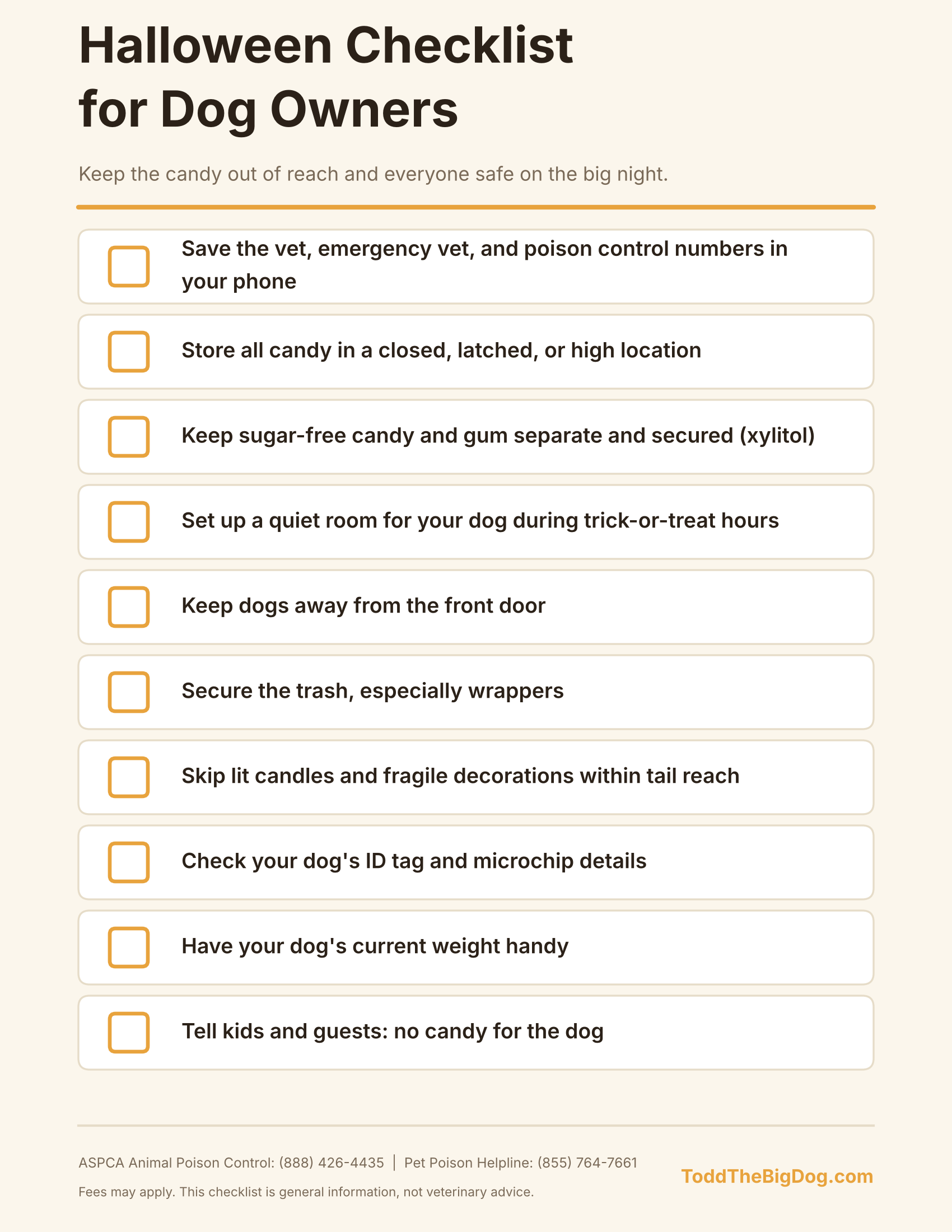
The bottom line
Halloween can be fun for everyone in the house, including
the dog, as long as the candy stays where it belongs. Chocolate is the
headliner, but xylitol, raisins, wrappers, and rich fatty treats are all part
of the October danger list, and a big dog's size can give you a false sense of
security.
The most useful habit you can build isn't memorizing
milligrams. It's this: keep the candy out of reach, know who to call, and
call early. A phone call that turns out to be nothing costs a little. A
wait-and-see approach that turns out to be something can cost a lot more.
Have a safe, silly, spooky Halloween. Give your dog an extra
scratch from us. And if the candy bowl suddenly seems lighter than it should
be, don't guess. Make the call.
Have a Halloween close call story or a dog-safe treat
your big dog loves? Share it in the comments or tag us at @ToddTheBigDog. We
love seeing your dogs in their costumes (or in their dignified bandanas).
This article is for general information only and is not
veterinary advice. If you think your dog has eaten something toxic, contact
your veterinarian, an emergency clinic, or a poison control service right away.